

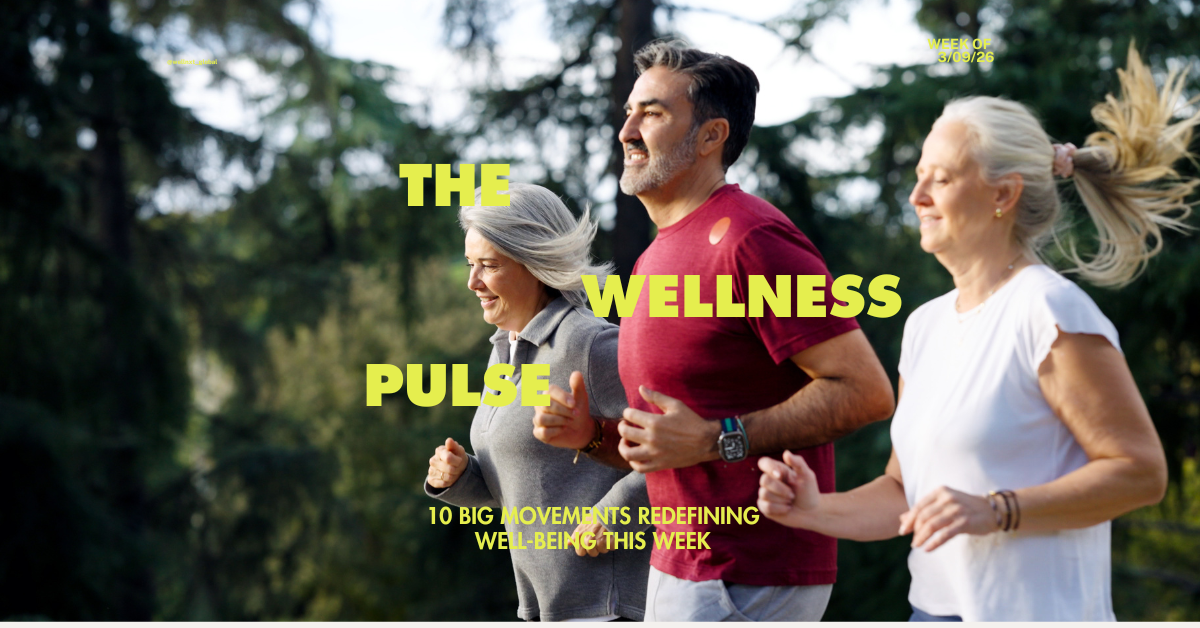
This week’s signal: wellness is moving decisively from individual optimization to system design. Regulators are tightening claims, scientists are redefining disease mechanisms, and healthcare organizations are embedding prevention directly into clinical environments. The message is clear—wellness is becoming infrastructure, not just a lifestyle conversation.
Here are the 10 stories shaping where the industry is heading next.

1) FDA Warns Telehealth Companies Over Compounded GLP-1 Marketing
The U.S. Food and Drug Administration issued warning letters to more than 30 telehealth companies accused of illegally marketing compounded GLP-1 medications for weight loss. The agency said some platforms misrepresented the drugs as FDA-approved or made unsupported claims about safety and effectiveness.
Why it matters: As demand for metabolic health treatments surges, regulatory scrutiny is becoming the new gatekeeper of trust.
📍 Source: FDA
2) Kidney Stone Research Reveals Hidden Bacterial Role
Researchers supported by the National Institutes of Health discovered that bacteria may play a critical role in forming kidney stones, including types previously believed to be purely mineral-based. The findings suggest biofilms may help stones grow and persist.
Why it matters: The microbiome is expanding far beyond gut health—microbial ecosystems are emerging as drivers of multiple chronic diseases.
📍 Source: NIH
3) Scientists Introduce a New Metric for Measuring Gut Health
Researchers at Rutgers University unveiled a new index that tracks how gut microbes interact with each other—rather than simply measuring which bacteria are present. The system may help predict disease progression and better understand microbial imbalances linked to cancer and inflammatory conditions.
Why it matters: The microbiome conversation is evolving from “which microbes exist” to “how microbial ecosystems behave.”
📍 Source: Rutgers
4) Heart Attack Deaths Rising Among Adults Under 55
New research highlighted by the American Heart Association shows that mortality after first hospitalization for severe heart attacks has increased among adults ages 18–54, with women experiencing higher death rates than men. Researchers point to underrecognized risk factors such as kidney disease, substance use, and socioeconomic stress.
Why it matters: Preventive care is expanding beyond cholesterol and blood pressure to include social, behavioral, and environmental risk factors.
📍 Source: American Heart Association

5) Debate Intensifies Around U.S. Dietary Guidelines
The Washington Post reported growing debate among scientists and policymakers about the evidence standards used to shape the newest Dietary Guidelines for Americans. Critics say some recommendations rely on inconsistent evidence while major questions remain around ultra-processed foods and artificial sweeteners.
Why it matters: Nutrition guidance is increasingly contested territory—and transparency around evidence will shape consumer trust.
📍 Source: The Washington Post
6) Accelerated Depression Treatment Shows Promise
Researchers reported that a condensed protocol for transcranial magnetic stimulation (TMS)—five sessions per day for five days—may deliver results comparable to traditional multi-week treatment schedules for some patients with depression.
Why it matters: Scaling mental healthcare may depend as much on treatment design as on new medications.
📍 Source: Science Daily
7) New JAMA Oncology Study Links Consistent Physical Activity to Lower Cancer Risk
A new study in JAMA Oncology adds fresh evidence that sustained, moderate physical activity is associated with meaningful reductions in cancer risk. The findings reinforce that movement isn’t just “fitness”—it’s a prevention lever with population-level impact.
Why it matters: This is the clearest business case for everyday movement: it’s one of the most scalable, low-cost interventions we have—and it belongs in workplaces, cities, and healthcare strategy.
📍 Source: JAMA
8) Quantum Health Acquires CirrusMD to Expand Virtual Care
Healthcare navigation platform Quantum Health announced it is acquiring virtual care provider CirrusMD, integrating physician-led messaging and telehealth services into its benefits navigation platform for employers.
Why it matters: Healthcare’s “front door” is shifting toward integrated navigation platforms that guide patients to care faster and more efficiently.
📍 Source: HLTH

9) Cincinnati Launches Region’s First Academic Wellness Suite and Learning Kitchen
UC Health and the University of Cincinnati have opened the region’s first academic wellness suite and teaching kitchen, designed to integrate nutrition education, lifestyle medicine, and preventive care. The facility will support patients, clinicians, and students through hands-on culinary training and wellness programming.
Why it matters: Healthcare systems are beginning to embed lifestyle medicine directly into clinical settings—bringing food-as-medicine and behavior change into mainstream care.
📍 Source: WCPO
10) Bone Density Becomes the Latest Consumer Health Obsession
Coverage in The Wall Street Journal highlights the growing fascination with bone density testing and DEXA scans among health-conscious consumers. While awareness is rising, experts caution that testing without context can create confusion around what actually improves bone health.
Why it matters: The next frontier of wellness isn’t simply more data—it’s helping people interpret health signals in meaningful ways.
📍 Source: Wall Street Journal
WISe Takeaway
Across this week’s headlines, one pattern stands out: wellness is moving upstream and into institutions. Regulators are policing claims, scientists are redefining disease pathways, and healthcare systems are embedding prevention—from nutrition education to mental health access—into the core of care.
The next era of wellness won’t be built by individual habits alone. It will be built by systems that make healthier choices easier, more trusted, and more accessible at scale.
Follow WISe Wellness Guild on LinkedIn and Instagram for next week’s Wellness Pulse.
Is your brand set up for success in the wellness industry? Take our WISe Brand Blueprint Assessment or schedule a free discovery call to get started.
📌 Follow WISe Wellness Guild on LinkedIn and Instagram for next week’s Wellness Pulse.