

Part II: Designing for Monday Morning
By Stevi Gable Carr
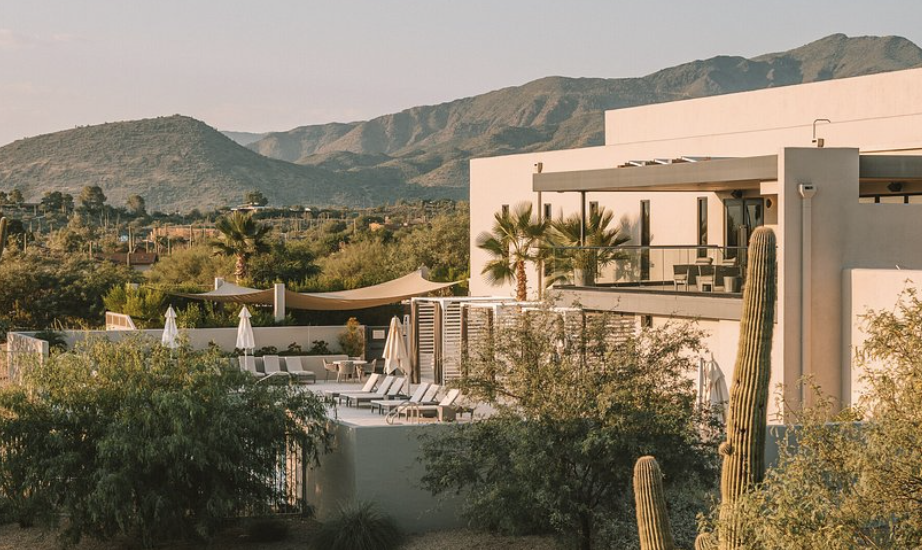
Civana
What behavioral science can teach hospitality about lasting transformation.
There is a phrase I come back to often in conversations with wellness leaders.
People don't need another reset. They need a new rhythm.
For years, the wellness industry has been built around the idea of escape. Escape from work. Escape from stress. Escape from technology. Escape from routines that no longer serve us. There is tremendous value in that. Sometimes stepping away is exactly what allows us to see ourselves more clearly.
But I've begun to wonder if we've unintentionally confused interruption with transformation.
An interruption is temporary. Transformation changes the trajectory. Those are very different outcomes.
As I look across healthcare, executive coaching, consumer psychology, and hospitality, I see an industry standing at an important inflection point. Wellness destinations have become remarkably good at helping people feel different while they're on property. The next evolution will be helping people live differently once they leave. That isn't simply a programming challenge. It's a human behavior challenge. And fortunately, we know far more about human behavior than we did even a decade ago.
Some of the most influential thinking in my career came not from the hospitality industry, but from my time studying executive coaching and organizational change at the Weatherhead School of Management at Case Western Reserve University.
There, I had the privilege of learning from Dr. Ellen Van Oosten, Dr. Melvin Smith, and the teachings of Dr. Richard Boyatzis —scholars whose work has fundamentally shaped how organizations think about leadership, behavior change, and human development.
One idea, in particular, has stayed with me long after the classroom. Lasting change rarely begins with information. It begins with aspiration.
Richard Boyatzis' work on Intentional Change Theory challenges a belief that many industries—including healthcare and wellness—still hold: that people change because they're told what they should do. Decades of research suggest something quite different. Sustainable change begins when people become emotionally connected to a compelling vision of who they want to become—their Ideal Self. Information matters. Accountability matters. Skill-building matters. But those things become far more powerful when they're anchored to hope rather than obligation.
That insight has quietly shaped how I think about almost everything.
It has influenced how I coach physician leaders navigating complex health systems. It has informed how I think about organizational culture and consumer behavior. And increasingly, I believe it has profound implications for the future of wellness hospitality.
Because perhaps the most valuable thing a wellness destination can offer isn't another protocol or another treatment. Perhaps it's helping someone reconnect with the person they want to become—and creating an environment where that future begins to feel possible.
Think about how often wellness conversations begin with optimization. Sleep more. Exercise more. Reduce stress. Eat differently. Meditate. Drink more water. None of those recommendations are wrong. In fact, most of us already know them. Knowledge has never been our greatest barrier. Identity is.

People rarely build lasting habits because someone gave them a checklist. They build lasting habits because, somewhere along the way, they stopped seeing themselves as someone trying to exercise and began seeing themselves as an active person. They stopped trying to eat healthier and began seeing themselves as someone who values nourishment. They stopped trying to become a calmer leader and began believing they were capable of leading differently.
Identity always outlasts information. That insight has profound implications for wellness hospitality.
What if the role of a wellness destination isn't simply to educate guests? What if its greatest opportunity is to help guests reconnect with a version of themselves they've quietly lost along the way? I've had the privilege of coaching physician leaders who oversee thousands of employees, billion-dollar health systems, and incredibly complex organizations. Many arrive convinced they need better leadership strategies. Occasionally they do. More often, they need permission to lead in a way that aligns with who they actually are.
Somewhere along the journey, many have become trapped by expectations—what a physician should sound like, what an executive should prioritize, what success is supposed to look like. They spend years performing competence while quietly disconnecting from purpose. The work isn't introducing a new leadership framework. It's helping them remember the leader they wanted to become before the title arrived. When that happens, behavior changes naturally. Not overnight. Not perfectly. But consistently.
I've started wondering whether wellness destinations are uniquely positioned to create similar moments of clarity. Not because they offer answers. Because they offer space. Space to notice what we've stopped noticing. Space to hear thoughts that are normally drowned out by calendars and notifications. Space to ask questions that everyday life rarely leaves room for, asking “who am I becoming? Is this pace sustainable? What kind of life am I actually building?”
Those questions rarely emerge between conference calls. They emerge while walking through a forest before breakfast. They emerge after finally sleeping eight uninterrupted hours. They emerge during conversations that aren't rushed toward the next appointment.
Perhaps that's one of hospitality's greatest gifts. Not relaxation. Perspective.
Several months ago, I was speaking with a resort executive about guest programming. The conversation quickly turned to what they might add next. Another visiting expert. A new longevity assessment. Expanded diagnostics. Additional recovery technologies. The questions were thoughtful and familiar. Innovation has always been one of this industry's strengths.
But I found myself asking something different. "What problem are you trying to solve?"
The room became quiet for a moment. Because adding experiences and solving problems are not always the same thing. This isn't unique to hospitality. Consumer brands have spent decades learning that more product choices don't necessarily create better consumer experiences. Healthcare has learned that adding specialists doesn't automatically improve patient outcomes unless care is coordinated. Organizations discover the same thing when they grow. New initiatives, committees, technologies, and priorities accumulate until complexity becomes mistaken for progress. Wellness destinations face a similar temptation.
The industry has never had more extraordinary tools available. Advanced diagnostics. AI-powered personalization. Continuous glucose monitoring. Wearables. Recovery technologies. Functional medicine. Precision nutrition. Longevity science. Every one of these innovations has the potential to improve lives.
But only if they are part of a coherent philosophy. Otherwise, they risk becoming what psychologists sometimes call "choice overload." More information. More recommendations. More things for already overwhelmed people to manage.
Consumers aren't looking for more inputs. They're looking for clarity. That's why I increasingly believe the competitive advantage of the next decade won't belong to the organization with the longest menu of wellness offerings. It will belong to the organization with the clearest point of view.
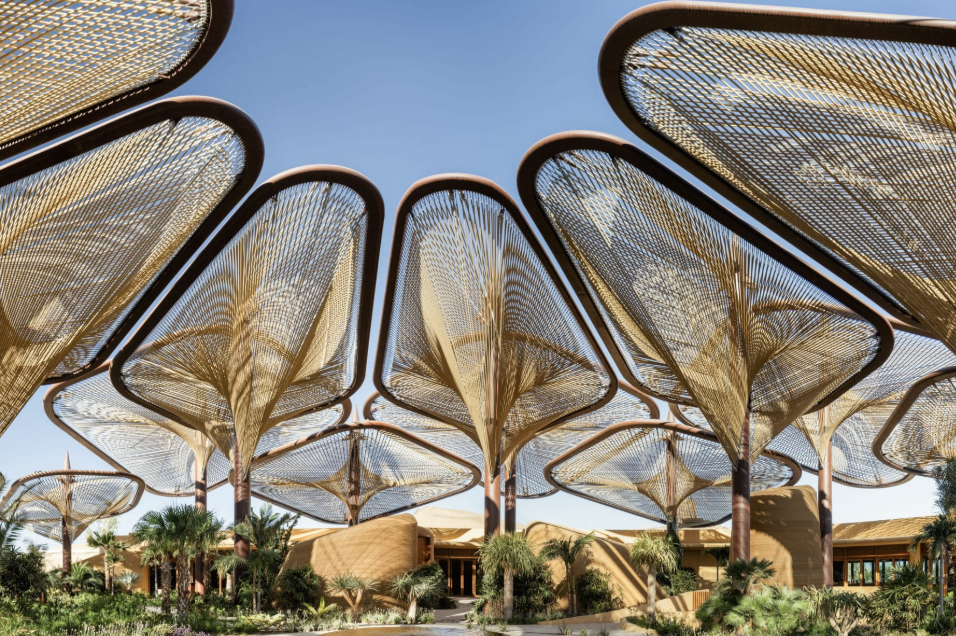
Six Senses Southern Dunes
When I visit properties like Six Senses or Canyon Ranch, what stays with me isn't any single treatment or workshop. It's the feeling that every decision belongs to the same conversation. Architecture supports sleep. Food supports vitality. Movement supports longevity. Nature supports restoration. Conversations support emotional wellbeing. Nothing feels accidental. That level of coherence creates trust. Guests may never consciously recognize why the experience feels different. But they feel it.
Intentionality has a way of becoming visible. Community is another area where I believe the industry has only begun to scratch the surface. One of the most meaningful moments at a WellNXT event rarely happens on stage. It happens afterward. Someone lingers after a panel discussion and starts talking to the person beside them. Two strangers discover they've been navigating similar health challenges. A physician exchanges ideas with a fitness coach. A founder meets someone who becomes both a collaborator and a friend. Weeks later, they're still texting. Months later, they're still encouraging one another. I've watched those relationships outlast the event itself.
It reminds me that transformation has always been social.
We like to imagine change as an individual pursuit, but the research consistently tells us otherwise. Whether we're looking at the world's longest-lived communities, the science of organizational culture, or decades of behavioral psychology, the conclusion is remarkably consistent: environments shape behavior, and people shape environments.
Perhaps that's why so many wellness routines disappear after vacation. We return to the same context that created the habits we were trying to change. The destination gave us a glimpse of another way to live. But our environment invited us back into familiar patterns. What if wellness hospitality didn't end at checkout? What if it became the beginning of a community instead?
The more I think about the future of this industry, the less interested I become in asking, "What experience should we design next?" I'm much more interested in asking, "What kind of person are we helping our guests become?"
It's a fundamentally different question. One focuses on activities. The other focuses on identity. One measures satisfaction. The other measures transformation.
And one naturally extends far beyond the boundaries of a physical property. Because if hospitality can help someone rediscover who they want to become—and provide the relationships, tools, and support to continue becoming that person after they leave—then the stay becomes something much larger than a memorable trip. It becomes a turning point.
In the final essay of this series, I'll share the framework that has emerged from years of observing these patterns across consumer brands, healthcare, executive coaching, and wellness hospitality. I call it The Wellness Destination Operating System™, not because I believe the industry needs another model, but because I believe the organizations shaping the next decade already understand an essential truth:
Transformation isn't created by any single experience. It's created by hundreds of intentional decisions that, together, help people build lives they don't feel the need to escape from.

Founder + CEO Stevi Gable Carr
About the Author
Stevi Gable Carr is a business strategist, executive coach, and founder working at the intersection of healthcare, hospitality, consumer behavior, and leadership. As Founder & CEO of WISe Wellness Guild and Co-Founder of WellNXT, she advises health systems, wellness brands, destinations, and executive teams on designing experiences that build trust, foster community, and create lasting behavior change. Her work is grounded in a simple belief: the most valuable wellness experiences aren't the ones people remember—they're the ones that quietly change how people choose to live.