

Part I: The Stay Is Just the Beginning
By Stevi Gable Carr
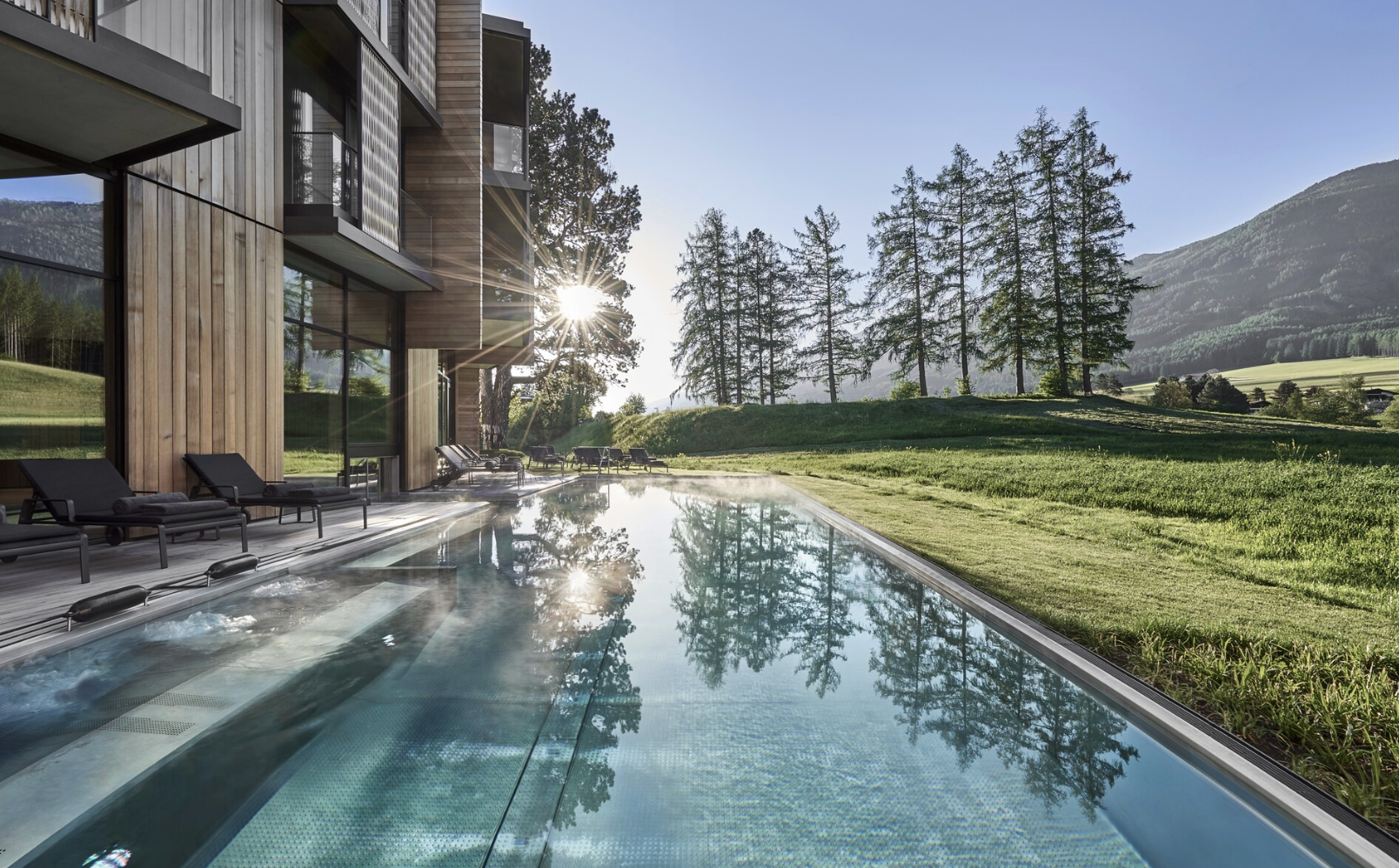
Lanserhof
A few years ago, I started noticing the same conversation happening in very different places.
Sometimes it was in the boardroom of a health system. Sometimes it was with a physician executive trying to lead culture change. Sometimes it was inside a consumer research facility, listening to people explain why they desperately wanted to live healthier lives but couldn't seem to make new habits stick. More recently, I've heard versions of that conversation while walking extraordinary wellness destinations around the world.
On the surface, those industries don't have much in common. One treats disease. One develops leaders. One builds brands. One creates hospitality experiences. But underneath them all is the same question:
How do we help people create change that lasts?
I don't think that's a healthcare question anymore. I don't think it's a coaching question. Increasingly, I think it's becoming hospitality's question.
The wellness tourism industry has grown into one of the most dynamic sectors in global travel. The Global Wellness Institute estimates it generated nearly $900 billion in expenditures in 2024, with growth expected to continue well beyond the pace of traditional tourism. That growth reflects something much larger than a new travel trend. It reflects a cultural shift.
People aren't booking wellness stays because they want another vacation. They're booking them because something in their lives feels out of alignment.
Sometimes it's burnout. Sometimes it's grief. Sometimes it's chronic stress that has quietly become normal. Sometimes it's simply the realization that success has come at the expense of health. Whatever brings someone through the doors of a wellness destination, they're rarely searching for another massage.
They're searching for a different version of themselves, and that's an extraordinary responsibility.
One of my favorite questions to ask executives is deceptively simple: "what business are you really in?" The answers are revealing.
Airlines aren't just transporting passengers; they're connecting people. Universities aren't selling degrees; they're expanding opportunity. Healthcare isn't delivering procedures; at its best, it's helping people live fuller lives. So what business is wellness hospitality actually in?
For years, I would have answered that question by talking about experiences. Today, I'm not so sure. Experiences matter. Beautifully designed spaces matter. Exceptional programming matters. The organizations leading this industry—from Clinique La Prairie and Canyon Ranch to Six Senses, SHA Wellness Clinic, Sensei, Lanserhof, and many others—have shown what's possible when hospitality, medicine, movement, nutrition, and emotional wellbeing are thoughtfully integrated.
They've expanded our definition of luxury.
But the more time I spend with operators, physicians, coaches, and guests, the more I find myself asking a different question. What happens on day thirty? Or day ninety? Or six months after checkout? Because that's where the real story begins.
Years ago, while working in consumer behavior, I learned that awareness and action are remarkably different things. People know they should sleep more. They know they should move more, they know vegetables are good for them.
Knowledge has never been the scarce resource. Life is.
Then I saw the same pattern inside healthcare. Patients left appointments genuinely motivated to make changes, only to find themselves navigating workplaces, family obligations, financial realities, and routines that quietly pulled them back toward familiar behaviors.
Later, executive coaching taught me another version of the same lesson. Leaders don't change because someone gives them better information. They change because they begin to imagine a different future for themselves—and because they have the support to keep moving toward it when that future feels difficult or inconvenient.
Eventually, I realized I wasn't collecting unrelated experiences across different industries. I was studying the same human problem from four different angles. That realization fundamentally changed how I think about wellness destinations.
Not long ago, I returned home from a remarkable wellness property. Like so many guests, I left convinced I was going to protect everything I'd rediscovered there. I had slept deeply. I had eaten slowly. I had spent more time outdoors in a few days than I normally managed in weeks. My phone stayed in my bag more often than it stayed in my hand. I found myself having conversations that felt unhurried—a rarity in modern life. By any measure, the experience had done exactly what it promised.
Then I returned home.
Within forty-eight hours I was answering emails between meetings, coordinating my son's schedule, preparing for travel, and trying to squeeze movement into the margins of an already full day. Nothing had gone wrong. In fact, that's precisely the point. The destination had created an environment where healthy living felt natural. My everyday environment had been designed for something else entirely. I've thought about that contrast ever since. Not because it exposed a weakness in wellness hospitality- quite the opposite. It revealed its greatest opportunity.
Perhaps the future of wellness isn't about creating more extraordinary experiences- perhaps it's about helping extraordinary experiences survive ordinary life. That idea has stayed with me.
It has shaped conversations with resort operators, physicians, behavioral scientists, executive teams, and entrepreneurs. It has become the lens through which I evaluate new technologies, guest programming, digital platforms, and community strategies. Eventually, I realized I was describing something larger than a guest journey. I was describing an operating philosophy- one that treats hospitality not as the destination, but as the catalyst. Not as the finish line, but as the beginning.
In the next essay, I'll explore why behavioral science may hold some of the most important lessons for the future of wellness hospitality—and why I believe luxury destinations aren't competing with one another nearly as much as they're competing with the realities waiting for guests when they return home.
I'd love to hear from leaders across hospitality, tourism, healthcare, sports, and wellness: What organizations are redefining what a "healthy destination" looks like? Who is building the future of wellness ecosystems?

Stevi Gable Carr
About the Author
Stevi Gable Carr is a business strategist, executive coach, and founder working at the intersection of healthcare, hospitality, consumer behavior, and leadership. As Founder & CEO of WISe Wellness Guild and Co-Founder of WellNXT, she advises health systems, wellness brands, destinations, and executive teams on designing experiences that build trust, foster community, and create lasting behavior change. Her work is grounded in a simple belief: the most valuable wellness experiences aren't the ones people remember—they're the ones that quietly change how people choose to live.