

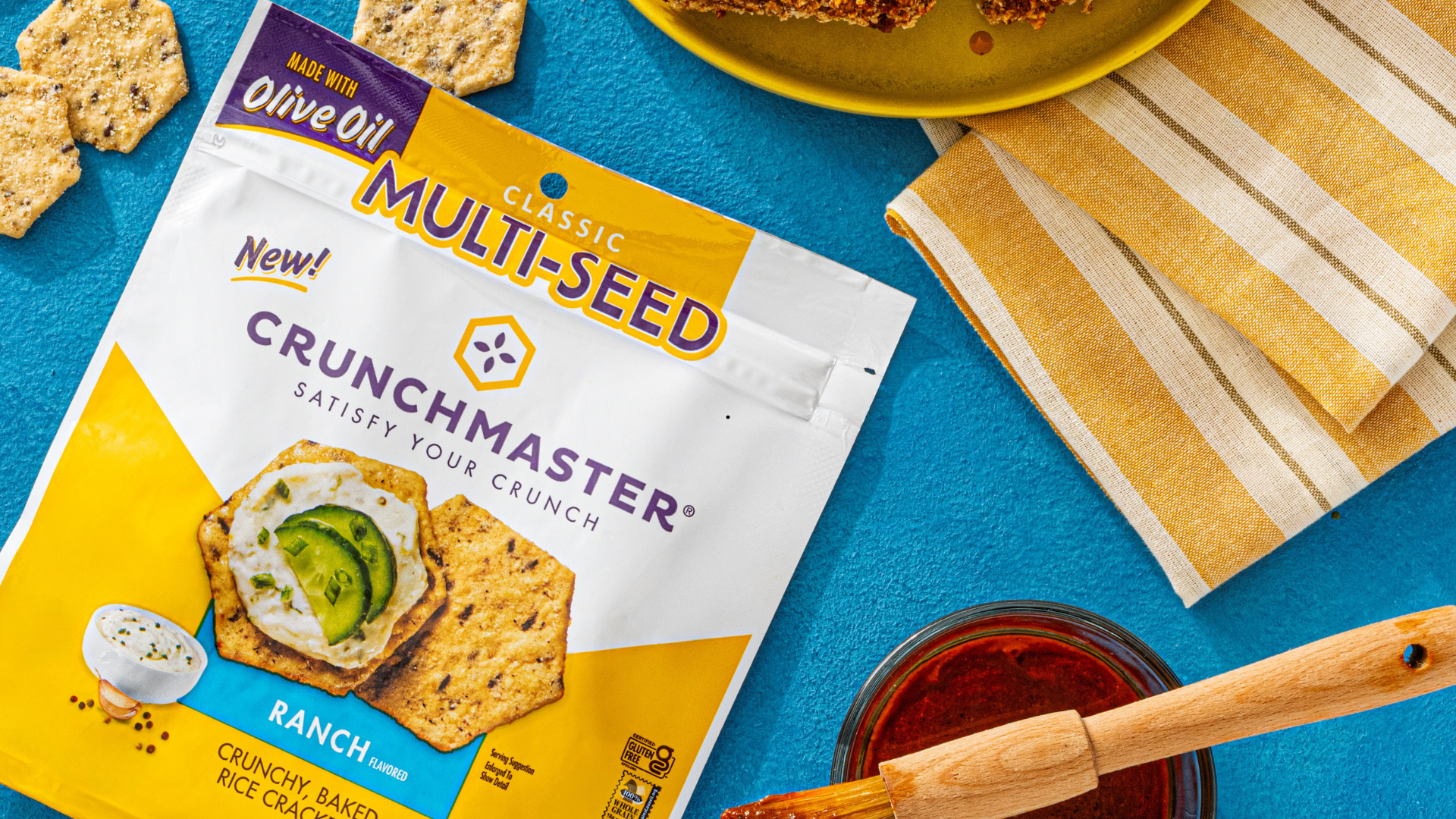
As consumers ask more questions about what's in their food, one of WISe Wellness Guild's brand partners is taking an additional step toward ingredient transparency and independent verification.
Food labels have become more than a place to check calories and serving sizes. Today's consumers are paying closer attention to ingredients, sourcing, processing, and the claims brands make about their products.
Seed oils have become part of that conversation, generating considerable attention across social media, grocery aisles, and the broader wellness industry.
But beyond the debate about individual ingredients lies a bigger question: How can consumers feel confident that the products they purchase meet the standards brands promise?
Our client and partner, Crunchmaster, is helping answer that question through independent third-party certification.
Beginning November 1, 2026, all Crunchmaster products produced on or after that date are Seed Oil Free Certified®, a designation that verifies compliance with the standards established by the Seed Oil Free Alliance®.
For Crunchmaster, it's another way to provide consumers with more information about the ingredients in their favorite snacks. For the broader wellness industry, it offers a timely example of how brands can turn ingredient commitments into independently verified claims.
Why Ingredient Transparency Matters
Consumers have more access to nutrition information than ever before, but more information doesn't always mean greater clarity.
Ingredient lists, certifications, nutrition claims, and conflicting wellness advice can make even everyday grocery decisions feel complicated.
Seed oils are one example.
These oils, which include soybean, canola, sunflower, and corn oil, are widely used in packaged foods. Some consumers prefer to avoid them because of personal dietary preferences or concerns about food ingredients and processing.
However, it's important to distinguish consumer preferences from established nutritional science.
Seed oils are not inherently harmful simply because they come from seeds. Research on unsaturated fats generally supports replacing saturated fats with unsaturated fats, including those found in many commonly used vegetable oils, as part of a heart-healthy dietary pattern.
Choosing to avoid seed oils is a personal food preference, not a medically necessary practice for the general population.
Still, consumers deserve accurate information about what they're purchasing, regardless of their dietary preferences.
That's where transparent labeling and independent verification can make a meaningful difference.
Crunchmaster Takes Ingredient Verification a Step Further
Crunchmaster has built its brand around crunchy, flavorful snacks made with ingredients such as brown rice, whole grains, and seeds.
Its crackers and crisps are certified gluten-free, and many products also carry Non-GMO Project Verified certification.
Now, Crunchmaster has added another layer of third-party verification through the Seed Oil Free Certified® program.
Unlike a brand making an unverified ingredient claim, certification requires qualifying products to meet an established standard.
The process includes:
Complete ingredient and subingredient review: Evaluating product formulations to verify compliance with the certification standard.
Independent laboratory testing: Testing added oils and fats for identity and purity.
Supply chain auditing: Reviewing sourcing and documentation to support compliance.
Ongoing monitoring: Maintaining oversight beyond the initial certification process.
The distinction matters. Certification provides independent verification that a product meets a specific standard. It does not establish that the product is healthier than alternatives or that uncertified products are unsafe.
For Crunchmaster, the certification supports a commitment to giving shoppers more information about the foods they choose.
What's Inside Crunchmaster Crackers?
One of the reasons Crunchmaster stands out in the snack aisle is its approach to ingredients and texture.
Many of its Multi-Seed varieties, including Multi-Seed Original and Multi-Seed Rosemary & Olive Oil, use olive oil. Its Avocado Toast varieties, including Salt & Pepper and Guacamole, use avocado oil.
Both oils come from fruits rather than seeds.
Crunchmaster also uses a traditional Japanese-inspired Usuyaki baking process, which means thinly baked or thinly grilled, to create its signature light, crispy texture.
And there's more to these snacks than their choice of cooking oil.
Crunchmaster Multi-Seed Original crackers feature ingredients such as sesame, flax, quinoa, and amaranth, providing 21 grams of whole grains and 308 milligrams of ALA omega-3 per serving, according to the brand's product information.
These details give shoppers multiple ways to evaluate a snack, from ingredients and dietary preferences to nutritional content, taste, and convenience.
For those specifically seeking crackers made without added seed oils, the new certification offers another useful checkpoint.
The Bigger Wellness Conversation: Trust Requires More Than a Claim
At WISe Wellness Guild, we work with wellness brands and organizations navigating an increasingly informed, and increasingly skeptical, consumer landscape.
We've seen how quickly ingredient trends can influence purchasing behavior, particularly when social media amplifies a specific nutrition concern.
But responding to consumer interest requires more than adopting the latest language on a package.
Brands also need to communicate clearly, substantiate their claims, and avoid overstating what the science supports.
That's what makes Crunchmaster's certification noteworthy.
Rather than relying exclusively on its own ingredient messaging, the brand has pursued outside verification against a defined standard.
This approach reflects three important principles for wellness brands:
1. Transparency creates opportunities for informed choice.
Consumers don't all have the same dietary goals. Providing clear, accessible ingredient information helps people choose products that align with their individual preferences.
2. Independent verification adds credibility.
Third-party certifications offer an additional layer of accountability by evaluating products against established criteria. They also help distinguish verified product attributes from general marketing language.
3. Responsible communication builds lasting trust.
Brands can acknowledge consumer interest in particular ingredients without making unsupported health claims or creating unnecessary fear around food.
The strongest wellness communications help consumers understand what a product offers, what its certifications mean, and what they don't mean.
A Crunch-Worthy Step Forward
We're proud to partner with Crunchmaster as the brand continues to evolve its approach to ingredient transparency and consumer communication.
Its Seed Oil Free Certified® designation gives shoppers another way to identify products that meet their preferences while reinforcing the value of independent verification.
And for the wellness industry, it's a reminder that trust isn't built through claims alone. It's built through clarity, consistency, and a willingness to substantiate what a brand says.
Because when consumers have better information, they can make more confident choices.
Explore Crunchmaster's certified crackers and crisps: Visit Crunchmaster
Sources & Further Reading
Disclosure: Crunchmaster is a client and brand partner of WISe Wellness Guild. This article is intended to provide information about ingredient transparency and third-party certification, not individualized nutrition or medical advice.